Phase 1: The Foundation – Market Research and Business Planning
Before buying a single piece of machinery, you must build a solid foundation. This phase is about defining your place in the market.
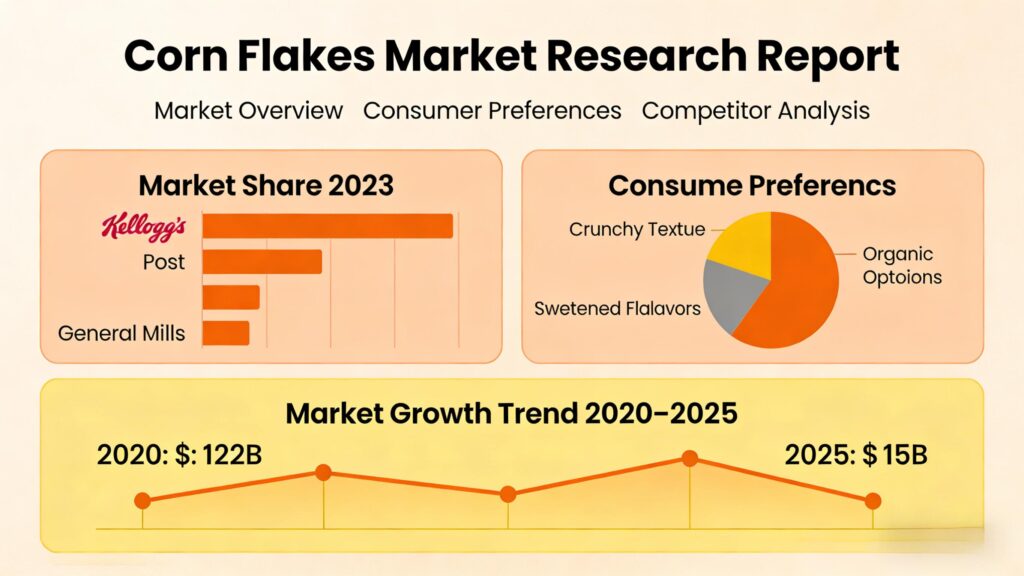
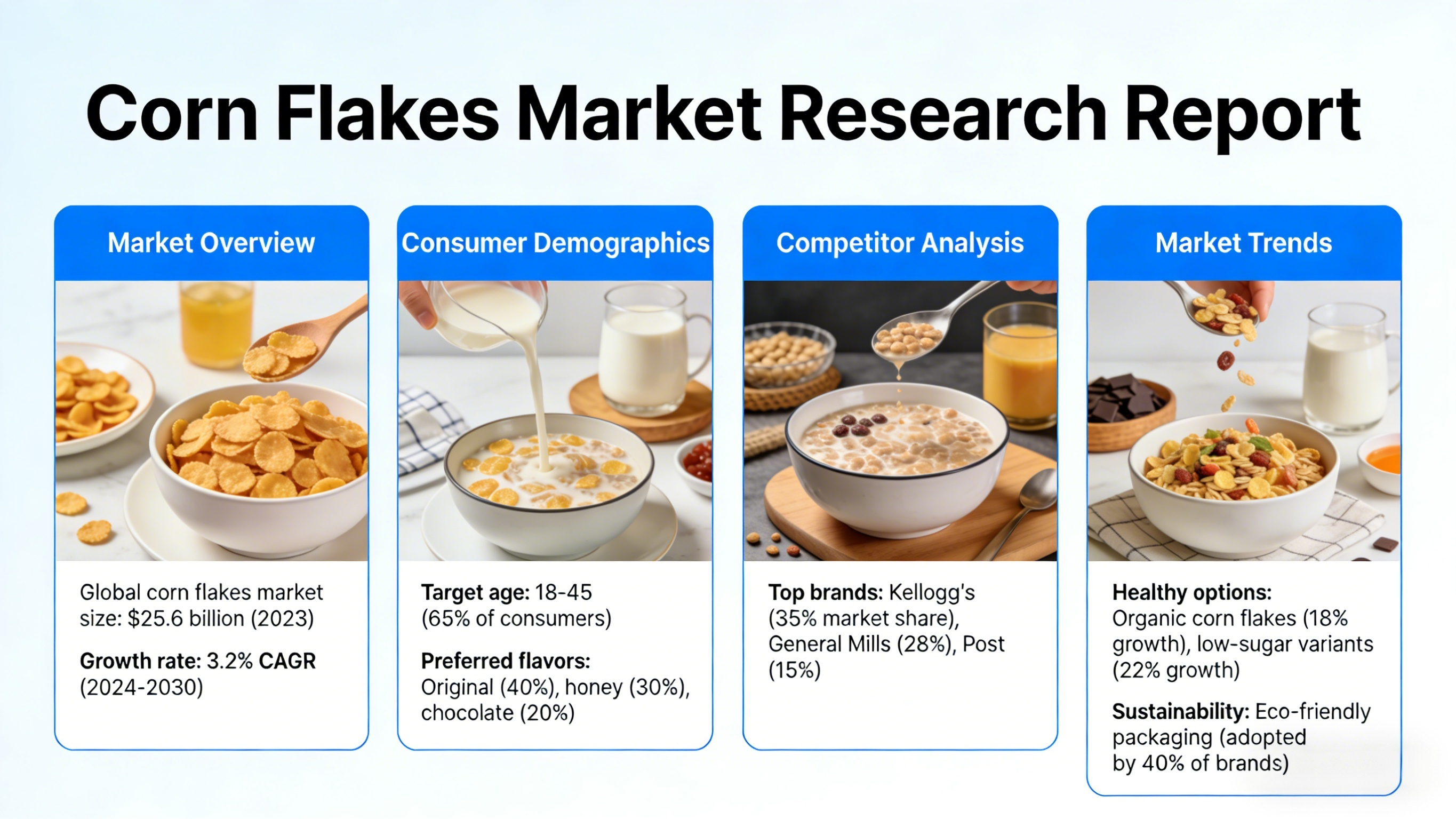
- Market Research & Niche Definition:
- Identify Your Target Audience: Are you making classic, sugary cornflakes for children? Organic, high-fiber flakes for health-conscious adults? Gluten-free flakes for a niche market? A luxury artisanal product for gourmet stores?
- Analyze the Competition: Understand what the major players (Kellogg’s, General Mills) and local competitors are doing. What is their pricing, packaging, and marketing strategy? How can you differentiate yourself?
- Identify Gaps: Is there a demand for locally sourced ingredients? Unique flavors (e.g., honey and spelt, dark chocolate)? Sustainable packaging?
- Business Plan Development:
This document is your roadmap and is essential for securing funding. It must include:- Executive Summary: A concise overview of your business.
- Company Description: Your mission, vision, and legal structure (LLC, corporation, etc.).
- Product Line: Detailed description of your initial products, including recipes, ingredients, and unique selling propositions.
- Market Analysis: The findings from your market research.
- Marketing and Sales Strategy: How will you reach your customers? (e.g., direct-to-consumer online, supermarkets, health food stores, restaurants).
- Management Team: Bios of the key people involved and their expertise.
- Operational Plan: A high-level overview of the production process and facilities.
- Financial Plan: Projected income statements, cash flow statements, and balance sheets for the next 3-5 years. This must include startup costs.
- Securing Funding:
Based on your business plan, you will need to secure capital. Options include:- Personal savings
- Bank loans
- Investors (angel investors or venture capital)
- Government grants for small businesses or food producers
Phase 2: The Blueprint – Legalities, Location, and Design
This phase translates your business plan into a physical reality.
- Legal and Regulatory Compliance (Crucial for Food Safety):
- Business Registration: Officially register your business name and legal structure.
- Food Safety Licenses: This is non-negotiable. You will need to comply with your country’s food safety agency (e.g., FDA in the US, FSA in the UK). This involves registering your facility and products.
- Health Permits: Obtain necessary permits from local health departments.
- Inspections: Your facility will need to pass rigorous inspections before production can begin.
- Zoning Laws: Ensure the chosen location is zoned for food manufacturing.
- Choosing the Right Location:
The facility is the heart of your operation. Key factors to consider:- Size: Adequate space for production line, raw material storage (silos/warehouse), finished goods warehouse, quality control lab, staff facilities (locker rooms, canteen), and offices.
- Utilities: Reliable and high-capacity access to water (often treated on-site), electricity (three-phase power for heavy machinery), gas, and waste disposal.
- Logistics: Proximity to major transport routes (highways, railways) for receiving raw grains and shipping finished products.
- Workforce: Located in an area with access to a skilled or trainable labor pool.
- Facility Design and Layout:
This must be designed by food industry specialists to ensure efficient workflow and prevent contamination.- Hygienic Zoning: The facility must be designed for HACCP (Hazard Analysis Critical Control Point) compliance. This means creating a clear separation between “dirty” areas (raw material receiving) and “clean” areas (final product packaging). Airflow, drainage, and surface materials (stainless steel, sealed concrete) are all critical.
- Product Flow: The layout should follow a logical, linear path: Raw Material Storage → Mixing/Cooking → Drying/Toasting → Coating → Cooling → Packaging → Finished Goods Warehouse.
Phase 3: The Engine – Equipment and Raw Materials
This is where the magic happens.
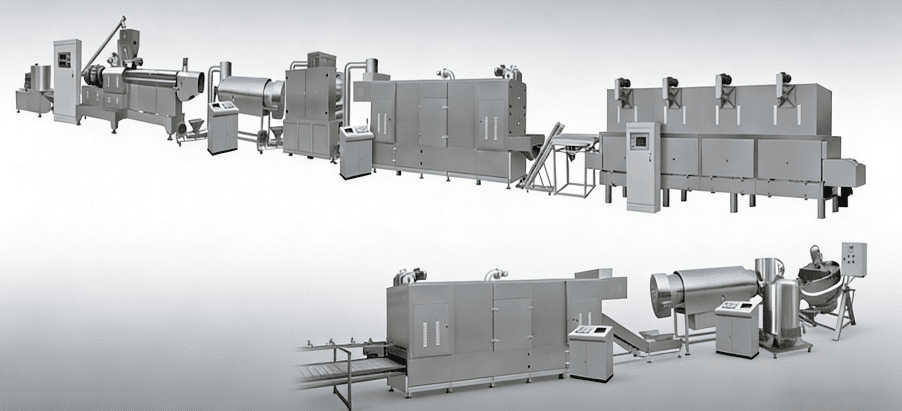
- Procuring the Production Line:
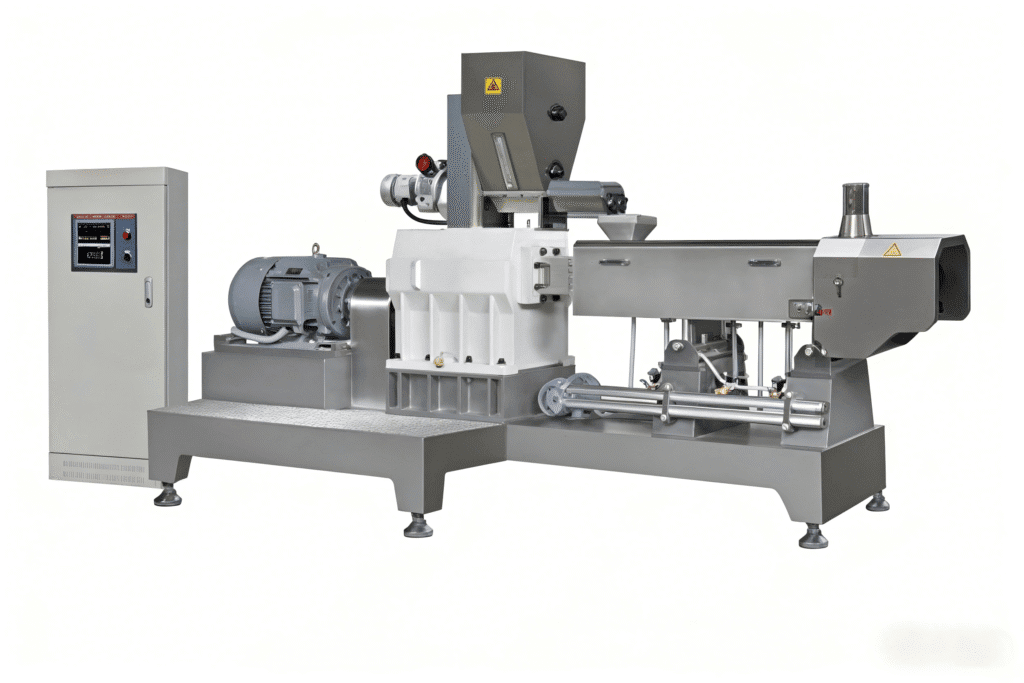
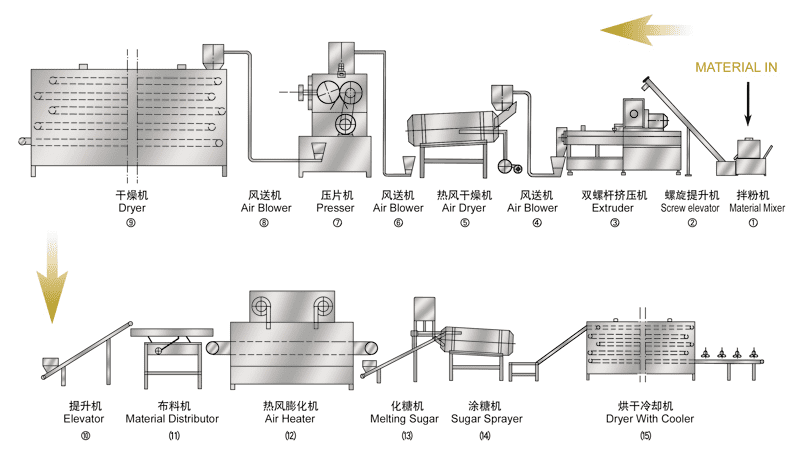
For cornflakes, the core equipment includes:- Grain Handling & Cleaning: Silos, conveyors, magnets, and sieves to remove impurities from the raw corn.
- Mixing & Cooking: Batch mixers and a cooking extruder or traditional steam-heated cooking vessels where the corn grits are mixed with malt, sugar, salt, and water to form a dough.
- Flaking: A flaking roller (two large, heavy, counter-rotating rollers) that presses the cooked and tempered pellets into thin flakes.
- Drying & Toasting: A toasting oven (a long, multi-zone gas-fired or electric oven) that dries the flakes and gives them their characteristic color, crispness, and flavor through the Maillard reaction.
- التبريد: A cooling conveyor to bring the flakes down to packaging temperature.
- Coating (Optional): If making frosted or vitamin-enriched flakes, you’ll need a coating drum.
- Packaging Line: Weighing and filling machines, bag sealers, carton erectors, and case packers.
- Sourcing Raw Materials:
Establish reliable, high-quality supply chains for:- Corn Grits: The primary ingredient. Quality and consistency are vital.
- Flavorings & Sweeteners: Sugar, malt extract, honey, salt.
- Fortification: Vitamins and minerals (e.g., iron, B vitamins) if you plan to offer an enriched product.
- Packaging Materials: Inner liners (plastic), cardboard boxes, and outer shipping cases. Sustainable options are a major selling point.
Phase 4: The People – Building Your Team
You cannot run a factory alone. A skilled team is essential.
- Production Manager: Oversees the entire manufacturing process.
- Food Technologist/Quality Assurance Manager: Develops recipes, manages the quality control lab, and ensures all products meet safety and quality standards.
- Maintenance Engineer: Keeps the complex machinery running.
- Line Operators: Skilled workers to run the specific machinery (mixers, ovens, packaging).
- Supply Chain/Logistics Manager: Manages inventory of raw materials and shipping of finished goods.
- Sales & Marketing Team: To sell your product and build your brand.
Phase 5: The Launch Pad – Testing, Marketing, and Operations
Before the official launch, you need to prove your process and build demand.
- Product Development & Testing:
- Prototyping: Run small batches to perfect your recipe and process.
- Shelf-Life Studies: Test how the product holds up over time in different packaging to determine its “best by” date.
- Taste Testing: Conduct panels with your target audience to get feedback and refine the product.
- Branding and Packaging Design:
- Create a Brand Identity: Logo, color scheme, and brand story that resonates with your target market.
- Design Packaging: The box is your primary marketing tool on a store shelf. It must be eye-catching, clearly communicate the product’s benefits, and comply with all food labeling laws (nutrition facts, ingredients, allergen info).
- Pre-Launch Marketing:
- Build a website and social media presence.
- Reach out to food bloggers and local media.
- Secure initial orders from local retailers or set up your online store.
- Pilot Production Run:
Before full-scale production, run a pilot batch. This tests your entire system—from receiving ingredients to packaging—under real conditions, allowing you to train your staff and iron out any kinks.
Starting a cornflake factory is a complex and capital-intensive venture, but for the well-prepared entrepreneur, it offers the exciting opportunity to create a beloved product and build a lasting brand. The key to success lies in relentless preparation and an unwavering commitment to quality and safety.If you want to know more about the corn flakes making machine , you can contact us .
Can we visit your factory ?
Yes , wlecome to our factory at any time , you can contact me .
1.Will you help us with the installation ?
Yes , We will send engineers to install and debug the equipment, and assist in training your staff.
2.Are you a factory or trading company?
We are a factory.
3.What certificate do you have?
We have ISO and CE certificate.
4.How long is the warranty period?
All of our machines have one year warranty.
5.What’s the main market of your company?
Our customers all over the world.
6.How much production capacity of your company one year?
This depends on your needs.